What is the mind-body problem? Dualism, identity theory and functionalism
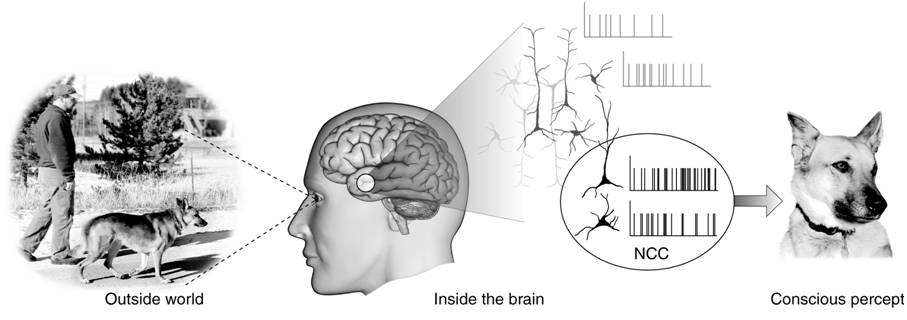
The mind-body problem asks how conscious experience relates to the physical body and brain. The quiz covers substance dualism, interactionism, identity theory, functionalism, multiple realizability, qualia and the hard problem of consciousness. Try the ten questions to see how these positions compare and where they differ.
10 questionsAnswers and score at the end
Practice quiz
Test your knowledge.
Question 1 of 100 answered
Adding up your answers
Your score is next.
Question 1
What does the mind-body problem concern?
It asks how conscious experience relates to the physical body and brain.
Source excerpt +
The central mystery arises when we try to explain how these two worlds—the felt and the measured—relate to each other.
From the Knowverse course text.
Question 2
What does substance dualism propose?
Substance dualism distinguishes mental substance from physical substance.
Source excerpt +
If the mind and body are two different 'stuffs', we face a new puzzle: how do they work together so perfectly?
From the Knowverse course text.
Question 3
What does interactionism add to dualism?
Interactionism says changes can pass causally between mental and physical events.
Source excerpt +
Most dualists believe in Interactionism, the view that the mind and body exert a direct causal influence on each other.
From the Knowverse course text.
Question 4
What is the interaction problem?
If mental substance is non-physical, its proposed influence on physical matter requires explanation.
Source excerpt +
If the mind is truly non-physical (no weight, no mass, no location), how can it possibly 'push' a physical brain cell?
From the Knowverse course text.
Question 5
Which statement expresses identity theory?
Identity theory asserts sameness, a stronger claim than correlation.
Source excerpt +
Identity Theory applies this logic to our inner lives, claiming that every mental state is just a physical brain state.
From the Knowverse course text.
Question 6
What does type identity theory associate with a type of mental state?
Type identity links recurring kinds of mental state to recurring kinds of physical brain state.
Source excerpt +
Type Identity suggests that every time a human feels a specific type of mental state, the same type of brain state is occurring.
From the Knowverse course text.
Question 7
What does functionalism use to characterize a mental state?
Functionalism considers what a state does and how it relates to the rest of the system.
Source excerpt +
A Functional Role is the specific purpose a state serves within the larger system of the mind.
From the Knowverse course text.
Question 8
What is multiple realizability?
Different physical arrangements could perform the same mental role.
Source excerpt +
Multiple Realizability means that the same mental state can exist in very different physical systems.
From the Knowverse course text.
Question 9
What are qualia?
The experienced sourness of a lemon is an example of a subjective quality.
Source excerpt +
Philosophers use the term Qualia to describe these individual, subjective qualities of our experiences.
From the Knowverse course text.
Question 10
What is Chalmers' hard problem of consciousness?
The hard problem concerns why processing has an internal, felt aspect.
Source excerpt +
Why does all that physical processing result in an internal feeling?
From the Knowverse course text.
YOUR SCORE
correct answers
Quiz complete
Here's how you did.
See the answer and explanation for each question below.
KNOWVERSE FOR IPHONE
Get the Knowverse app.
Find more quizzes and full courses in the free iOS app.
A description of pain can follow physical signals through the body or describe how the pain feels. Philosophy of mind asks how these descriptions relate. Substance dualism treats mind and body as different kinds of substance. Interactionism adds that mental and physical events can cause changes in one another.
That view faces the interaction problem: how could a non-physical mind affect a physical body? Identity theory takes a different position. It says mental states are physical brain states. The claim goes beyond observing a correlation between a feeling and neural activity, because it identifies them as the same event.
Source excerpt +
Chapter: The Mind-Body Problem
When you accidentally stub your toe against the corner of a heavy wooden table, two very different things happen at the exact same moment.
First, there is the physical impact where your skin and bone hit the wood, sending a flurry of electrical signals up your leg and into your brain.
Second, there is the sharp, throbbing 'ouch' that you actually feel—the internal experience of pain that makes you want to shout.
Every Mental State has a unique quality: it is private and accessible only to you from the inside.
No. They could see the neurons firing, but the 'feeling' of the pain remains locked inside your own first-person experience.
Now, let's look at the other side of the coin: the measurable, observable world of Physical States.
Unlike mental states, these physical events are public; anyone with the right equipment can observe and measure your neuron activity.
This entire chain consists of Physical States—events that we can weigh, measure, and track in space and time.
The central mystery arises when we try to explain how these two worlds—the felt and the measured—relate to each other.
This is known as the Mind-Body Problem: the puzzle of how a physical brain can produce non-physical thoughts.
No. There is a 'gap' between the physical description of atoms and the mental experience of joy.
Even with billions of neurons, we still don't understand how their firing 'turns into' a mental state like the color blue.
The Mind-Body Problem forces us to ask: is the mind just a byproduct of the brain, or is it something else entirely?
If you are a materialist, you might believe the mind is just what the brain does. But even then, the 'feeling' of thoughts remains hard to explain.
Solving the Mind-Body Problem would mean finally understanding how the 'base' of neurons connects to the 'tip' of conscious experience.
As we move forward, we will look at different theories that try to solve this, starting with the idea that the mind and body are two separate substances.
This is the core of the Mind-Body Problem. Even if the mind is produced by the brain, it has unique properties like 'privacy' and 'subjective feeling' that other physical objects (like rocks or even other organs like the heart) don't seem to have. Philosophers call this the 'explanatory gap.'
Most philosophers and scientists believe that many animals do have mental states, especially sensations like pain or hunger. However, it is harder to determine if they have complex mental states like 'beliefs about the future' or 'abstract desires.'
No, science is very good at explaining the physical states of the brain. The problem is that science usually deals with objective, third-person data. Philosophy points out that this data might not capture the whole story—specifically the first-person, subjective experience.
A 'neural correlate' is a specific physical state (like a group of neurons firing) that happens at the same time as a specific mental state (like feeling happy). Finding these correlates helps us map the brain, but it doesn't necessarily explain *how* the physical state becomes the mental one.
It's called a 'problem' because our standard way of understanding the world (science and physics) seems to clash with our standard way of understanding ourselves (as conscious beings). It is a deep tension in our knowledge that hasn't been fully resolved.
Chapter: Substance Dualism
When you stub your toe on a heavy wooden table, two very different things seem to happen at the exact same moment.
First, there is a physical event: your flesh and bone collide with the wood, causing nerves to send electrical signals to your brain.
Second, there is a mental event: you experience a sharp, throbbing feeling of pain and perhaps a flash of frustration.
While the physical collision can be measured with a ruler or a sensor, the 'feeling' of the pain exists only in your consciousness.
This gap between the physical body and the private mind is the foundation of Substance Dualism.
In philosophy, a substance isn't just a liquid or a powder; it is a fundamental 'stuff' that can exist all by itself.
A dualist would say the thought has no physical location. While your brain is in the room, the mental experience itself doesn't occupy space like a chair or a lamp does.
If the mind and body are two different 'stuffs', we face a new puzzle: how do they work together so perfectly?
Most dualists believe in Interactionism, the view that the mind and body exert a direct causal influence on each other.
Interactionism also works the other way: if you stub your toe (physical), it causes you to feel pain (mental).
The most famous supporter of this view was René Descartes, who believed the mind was a 'thinking thing' and the body was an 'extended thing'.
But Descartes ran into a massive wall that still haunts philosophy today: the Problem of Interaction.
If the mind is truly non-physical (no weight, no mass, no location), how can it possibly 'push' a physical brain cell?
Think of a ghost trying to turn a doorknob. If the ghost has no physical substance, its hand should simply pass through the metal.
This is the core of the Problem of Interaction. It suggests that if two things are completely different in nature, they shouldn't be able to touch or influence each other at all.
Substance Dualism offers a very intuitive way to look at ourselves, but it leaves us with a giant mystery about how our thoughts 'talk' to our atoms.
It aligns with our subjective experience. We feel like an 'I' that inhabits a body, rather than just being a collection of cells. Many religious and spiritual traditions also rely on the idea of a soul that can survive the body's death.
Not satisfactorily. He suggested the pineal gland as the interaction point, but he never explained *how* the interaction worked, only *where* he thought it happened. Later philosophers criticized this as just moving the mystery to a smaller location.
Yes, some philosophers proposed 'Parallelism,' where the mind and body are like two clocks set to the same time—they appear to work together but never actually touch. However, this view is much less popular than Interactionism.
Most modern neuroscientists are physicalists. They believe that every mental state (like a thought) is actually just a brain state. When you change the brain (with medicine or injury), the mind changes, which suggests they are the same thing.
Technically, yes. While 'soul' is the religious term, philosophers use 'mental substance' to describe the non-physical part of a person. It could just be a field of consciousness or a 'thinking stuff' that doesn't necessarily have religious implications.
Chapter: Identity Theory
For a long time, people saw bright flashes in the sky and called them lightning, treating them as a mysterious natural force.
Later, scientists discovered that these flashes were actually the movement of electrical charges between clouds and the ground.
Notice that we didn't find that lightning 'causes' electricity; we found that lightning is electricity.
In philosophy, we call this numerical identity, meaning two different names actually refer to the exact same thing.
It is like discovering that 'The Morning Star' and 'The Evening Star' are both just the planet Venus.
Identity Theory applies this logic to our inner lives, claiming that every mental state is just a physical brain state.
If you feel a sudden surge of happiness, this theory says that feeling isn't just 'linked' to your brain; it literally is a specific brain event.
No. That is correlation. Identity Theory goes further, saying the mental and physical are the same thing, like water and H2O.
This brings us to reductionism, the idea that we can explain complex things by looking at their simpler, physical parts.
In science, we reduced the concept of 'temperature' to the kinetic energy of moving molecules.
If we follow this path, the 'mind' doesn't disappear; it just gets a more precise physical description.
Just as a car's 'speed' is just the result of pistons and fuel, a thought is the result of neurons and chemicals.
Now, we need to consider how we categorize these states, which leads us to Type Identity.
Type Identity suggests that every time a human feels a specific type of mental state, the same type of brain state is occurring.
The most famous example used by philosophers involves the feeling of pain and a specific biological event.
Scientists identified certain nerve fibers, called C-fibers, that send signals when the body is damaged.
So, if 'Pain = C-fibers firing,' then wherever you find that firing, you have found pain.
This implies that the mental state is rigidly tied to the physical structure of the brain.
No. It means the mind and brain are the same thing. Saying 'the mind is in the brain' is like saying 'water is in H2O'—it misses the point that they are identical.
By treating the mind as the brain, we move philosophy of mind into the realm of empirical science.
We no longer need to wonder how a 'ghostly' mind moves a physical body; the mind moves the body because the mind is a physical part of the body.
To wrap up, we've seen how Numerical Identity allows us to say two names refer to one thing.
Reductionism showed us how to break the mind down into physical parts, and Type Identity gave us a way to categorize those parts.
This is often called the 'Phenomenological Gap.' Identity Theory suggests that we are experiencing the brain from the *inside*. Just because it feels like a 'thought' doesn't mean it isn't physical; it's just what it feels like to *be* a brain in that state.
Not necessarily, but it does mean that any choice you make must be a physical process. If your brain follows the laws of physics, then your 'choices' are also physical events following those same laws.
The most common criticism is 'Multiple Realizability.' Critics argue that if an alien or a robot had a different brain but acted like it was in pain, it would be unfair to say it isn't feeling pain just because it lacks C-fibers. (This is a topic for the next chapter on Functionalism!)
According to Type Identity, no. If the mental state is the same, the brain state must be the same type. If the brain states are different, then the mental states must also be slightly different.
It treats them the same as any other thought. Imagining a dragon is just a specific pattern of neurons firing in your visual and memory centers. It is a physical event, even if the dragon itself isn't real.
Functionalism describes a mental state through its role in a system, including its relations to inputs, other internal states and behavior. This allows multiple realizability: different physical systems could carry out the same mental role. A shared role would matter even when the systems had different physical structures.
The question of subjective feeling remains. Qualia are the experienced qualities of consciousness, such as the sourness of a lemon. David Chalmers calls explaining why physical processing is accompanied by experience the hard problem. Explaining a mechanism for a task and explaining why it feels like something are distinct questions.
Source excerpt +
Chapter: Functionalism
A biological heart is defined by its ability to pump blood through a body.
If a surgeon replaces a failing heart with a mechanical pump made of plastic and steel, that device is still considered a heart.
This is because we define the heart by its function—the job it performs—rather than the specific muscle tissue it is made of.
No. Anything that successfully catches mice, whether it is a sticky pad or a complex cage, is functionally a mousetrap.
In the philosophy of mind, Functionalism applies this same logic to our thoughts, feelings, and beliefs.
According to this theory, a mental state is not a specific piece of brain matter, but a specific job being done.
The 'Internal State' is what we call a Functional Role.
A Functional Role is the specific purpose a state serves within the larger system of the mind.
Let's look at the Functional Role of 'Pain' in a human.
For a functionalist, if a system performs this exact sequence, it is in pain.
This leads us to a powerful concept called Multiple Realizability.
Multiple Realizability means that the same mental state can exist in very different physical systems.
Think of a calculator. You can have a wooden abacus, a mechanical adding machine, or a digital smartphone.
Because they all perform the function of 'addition', they are all doing the same mental work.
This is why Functionalism is different from Identity Theory, which you learned about previously.
Identity Theory faces a problem called Carbon-Chauvinism.
If 'Pain' is only a specific human brain firing, then an alien with a different biology could never feel pain.
Functionalism avoids this. If the alien's system has a state that is triggered by injury and leads to avoidance, it is in pain.
According to Functionalism, yes. Since it fulfills the necessary functional roles, it possesses mental states.
This means that the mind is more like software than hardware.
A word processor program like 'Microsoft Word' can run on a laptop, a tablet, or a smartphone.
In summary, Functionalism allows us to be materialists without being limited to biological brains.
It defines the mind by its connections between inputs, internal states, and outputs.
According to a strict functionalist, yes. If a computer's software perfectly replicates the functional roles of human emotions (including the inputs, internal connections, and behavioral outputs), then the computer is experiencing those emotions. However, critics often argue that 'processing' an emotion isn't the same as 'feeling' it, which leads to the debate over consciousness.
Identity Theory says the mind *is* the brain (a specific physical substance). Functionalism says the mind is what the brain *does* (a specific process). This means Identity Theory is limited to biological brains, while Functionalism allows for the same 'mind' to exist in different physical systems like computers or aliens.
No. Most functionalists are materialists. They don't believe in a non-physical soul. Instead, they believe the mind is a high-level way of describing physical systems. Just as 'the economy' isn't a ghost but a way of describing people trading goods, the 'mind' is a way of describing the body processing information.
It's the idea that the same 'job' can be done by different 'workers.' For example, the job of 'telling time' can be done by a sun-dial, a grandfather clock, or a digital watch. In philosophy, it means the job of 'thinking' can be done by a human brain, an alien brain, or a computer chip.
Yes, according to Functionalism. Because mental states are defined by their functional roles, two people could have slightly different neural wiring but still be in the same state of 'believing it is raining' if that state leads to the same behaviors and thoughts.
Chapter: The Hard Problem
Biting into a fresh, yellow lemon produces a sharp, immediate sensation that is impossible to ignore.
Your mouth puckers, your tongue tingles, and you experience a specific 'zing' that we call sourness.
While a scientist can measure the acidity of the lemon juice, that measurement is not the same thing as the feeling of the flavor.
Philosophers use the term Qualia to describe these individual, subjective qualities of our experiences.
Qualia is the plural form; a single quality, like the specific 'redness' of a rose or the 'coldness' of ice, is a quale.
No. We can prove their eyes react to the same light waves, but the internal 'redness' is private and cannot be directly observed by anyone else.
For a long time, scientists believed that if we just mapped the brain well enough, the mystery of consciousness would disappear.
They focused on what philosopher David Chalmers calls the Easy Problems of consciousness.
These problems are called 'easy' because they can be explained by looking at the functions and mechanisms of the brain.
However, even if we explain every single physical process in the brain, one massive question remains unanswered.
Why does all that physical processing result in an internal feeling?
This is what David Chalmers named The Hard Problem of consciousness.
A computer can 'see' a face by processing pixels, but we don't think it has the quale of seeing that face.
If we are just biological machines, why aren't we just 'dark' inside, performing tasks without any awareness?
This brings us to a concept introduced by Joseph Levine: the Explanatory Gap.
Levine argued that there is a missing link in our understanding that science cannot currently bridge.
In other sciences, like chemistry, we can explain why water boils by looking at molecules.
When we see the molecules moving faster, the boiling is a necessary result. We don't need an extra 'feeling' of boiling.
But with the brain, you can look at every neuron and still ask: 'Okay, but why is there consciousness here?'
The Hard Problem challenges materialism because it suggests that physical facts alone might not tell the whole story of the universe.
If Qualia cannot be reduced to brain signals, then our current scientific map of reality might be missing its most central feature.
Not necessarily. In fact, most philosophers argue that Qualia are the *most* real thing we know, because we experience them directly every second. Just because science can't measure them objectively doesn't mean they don't exist in our subjective reality.
Some 'New Mysterians' argue exactly this. They suggest that human brains might be 'cognitively closed' to the mystery of consciousness, much like a dog is cognitively closed to understanding calculus. We might simply lack the mental tools to bridge the Explanatory Gap.
The Hard Problem is a major critique of Identity Theory. If the mind is *just* the brain, then there shouldn't be an Explanatory Gap. We should be able to see the 'feeling' in the brain cells. The fact that we can't suggests they might not be identical.
Most philosophers and scientists believe that many animals (especially mammals) do have Qualia, like the feeling of pain or hunger. However, since we can't even solve the Hard Problem for humans, proving it for animals is even more difficult.
It depends. If an AI becomes conscious, it might be able to explain it to us. But the Hard Problem suggests that even a super-intelligent AI would just be a very complex 'Easy Problem' unless it actually *feels* something inside.
 knowverse