Chemical bonding quiz: Lewis structures, polarity and molecular shape
Chemical bonding involves attractions among nuclei and electrons, forming ionic lattices or shared electron pairs in covalent bonds. The quiz covers Lewis structures, polar covalent bonds, double bonds, molecular shape from VSEPR, metallic bonding, and intermolecular attractions. Try all ten questions to check your understanding.
10 questionsAnswers and score at the end
Practice quiz
Test your knowledge.
Question 1 of 100 answered
Adding up your answers
Your score is next.
Question 1
What holds an ionic lattice together?
Opposite ionic charges attract in the lattice.
Source excerpt +
In summary, an ionic bond is the result of an electron 'theft' that creates oppositely charged ions, which then pull together into a lattice.
From the Knowverse course text.
Question 2
What characterizes a covalent bond?
Covalent bonding involves shared electron pairs.
Source excerpt +
In a covalent bond, two atoms share a pair of valence electrons to achieve stability.
From the Knowverse course text.
Question 3
What do dots in a Lewis structure represent?
Lewis structures track valence electrons.
Source excerpt +
To solve this, we use a visual map called a Lewis structure to account for every outer electron in a molecule.
From the Knowverse course text.
Question 4
How many electron pairs are shared in a double bond?
A double bond shares two pairs.
Source excerpt +
Yes! While this chapter focused on single pairs, atoms can share two or even three pairs of electrons to reach their octet. These are called double and triple bonds, which we will explore in an upcoming chapter.
From the Knowverse course text.
Question 5
In a polar covalent bond, which atom has partial negative charge?
The more electronegative atom attracts the shared electrons more strongly.
Source excerpt +
The atom with higher electronegativity gets a partial negative charge, written as $\delta^{-}$.
From the Knowverse course text.
Question 6
How many electron domains does one triple bond count as in VSEPR?
A multiple bond occupies one region around the central atom.
Source excerpt +
It is important to remember that a double or triple bond is still just one region of space, so it only counts as one domain.
From the Knowverse course text.
Question 7
What arrangement do two electron domains favor?
Two domains maximize their separation at 180 degrees.
Source excerpt +
When a central atom has exactly two electron domains, they push to opposite sides of the atom.
From the Knowverse course text.
Question 8
What is the molecular shape of water?
Water has two bonds and two lone pairs around oxygen. Its molecular shape is bent.
Source excerpt +
With two lone pairs pushing down on the two $O-H$ bonds, the molecule is forced into a bent shape.
From the Knowverse course text.
Question 9
What helps metals conduct electric current?
Delocalized electrons can move through the metal.
Source excerpt +
These lost electrons are now delocalized, which means they are no longer tied to any single atom.
From the Knowverse course text.
Question 10
When water boils, what mainly changes?
Steam still contains water molecules. Boiling does not chemically split them.
Source excerpt +
When you boil a pot of water on the stove, the steam rising into the air is still made of the same H2O molecules that were in the liquid phase.
From the Knowverse course text.
YOUR SCORE
correct answers
Quiz complete
Here's how you did.
See the answer and explanation for each question below.
KNOWVERSE FOR IPHONE
Get the Knowverse app.
Find more quizzes and full courses in the free iOS app.
Chemical bonding involves attractions among nuclei and electrons. In the ionic model, atoms form positive and negative ions that attract within a lattice. Covalent bonding shares electron pairs between atoms. These descriptions are useful models, and the degree of electron sharing varies rather than following a perfectly sharp boundary.
A Lewis structure shows valence electrons as dots and bonds as shared pairs. Single, double and triple bonds share one, two and three pairs respectively. Electronegativity describes attraction for bonding electrons. Unequal sharing makes a polar bond, with a partial negative charge toward the more electronegative atom.
Source excerpt +
In reality, bonding exists on a spectrum. While we teach ionic bonding as a complete transfer, most bonds have a tiny bit of sharing. However, for compounds like NaCl, the transfer is so nearly complete that the 'purely ionic' model is highly accurate.
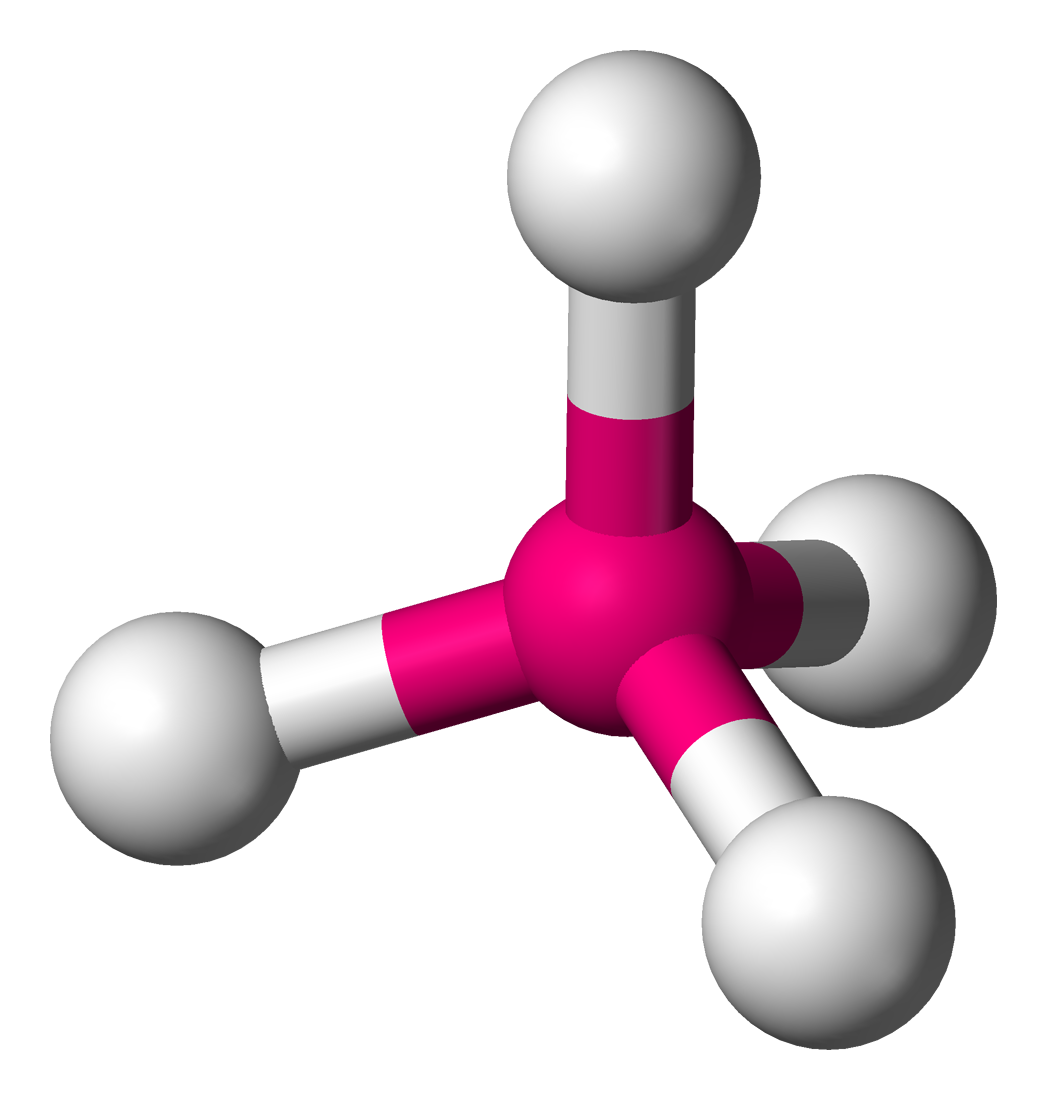
The VSEPR model predicts shapes from repulsion between electron domains around a central atom. A multiple bond counts as one domain. Two domains arrange linearly, while four have a tetrahedral arrangement. Lone pairs affect the arrangement of bonded atoms: water has four domains around oxygen but a bent molecular shape.
Metallic bonding involves positive metal centers and delocalized electrons, helping explain electrical conductivity. Attractions between molecules also affect a substance's behavior. Boiling water separates molecules without breaking their internal oxygen-hydrogen bonds. Hydrogen bonding between neighboring water molecules is an intermolecular attraction, distinct from the covalent bonds inside each molecule.
Source excerpt +
To predict a shape, we first count the electron domains, which are simply the regions where electrons are found.
 knowverse